Charting the Future of RoboCup and Maple Mind Academy in Canada: A New Era for STEM Education
- Axiomi Ai
- Sep 12, 2025
- 4 min read

In the rapidly evolving world of robotics and artificial intelligence, few initiatives inspire as much excitement and promise as RoboCup. Founded with the ambitious goal of advancing robotics and AI through competitive soccer-playing robots, RoboCup has become a global phenomenon attracting students, researchers, and tech enthusiasts alike. As the competition continues to expand, Canada is emerging as a vital player in this ecosystem, largely due to the innovative efforts of Maple Mind Academy. This distinctive educational institution is shaping the future of STEM education in Canada by empowering the next generation of engineers and scientists through hands-on experience with robotics and artificial intelligence.
What Is RoboCup and Why Does It Matter Beyond Robot Soccer?
RoboCup was established in 1997 with a vision that goes beyond soccer-playing robots: to develop a team of fully autonomous humanoid robots capable of winning against human world champions by the mid-21st century. Over the decades, RoboCup has evolved into a multifaceted competition featuring several leagues, including simulated robot soccer, rescue missions, industrial automation, and home-service robotics.
This diversity encourages innovators to solve real-world problems beyond the soccer field. RoboCup offers a dynamic platform where students engage in real-time decision-making, team collaboration, and rapid adaptation to complex environments, which are essential skills for success in STEM disciplines.
How Is RoboCup Growing in Canada?
While RoboCup started as an international initiative dominated by countries such as Germany, Japan, and China, Canada’s participation has significantly increased in recent years. This growth reflects Canada’s expanding investments in STEM education and its broader commitment to innovation and technology.
Canadian universities and high schools are now developing specialized robotics programs aligned with RoboCup’s objectives. Students participate not only to compete but also to acquire critical skills in programming, mechanical design, artificial intelligence, and robotics hardware integration. These initiatives have contributed to rising STEM enrollment rates and enhanced Canada’s reputation as an emerging hub for advanced robotics research.
Maple Mind Academy: Leading STEM Excellence Through Robotics Education
At the forefront of robotics education in Canada is Maple Mind Academy. Founded to blend creativity, technology, and education, the Academy offers immersive programs designed to engage young learners with STEM while preparing them for future technological challenges.
Unlike traditional classroom settings, Maple Mind Academy employs a project-based approach, emphasizing hands-on experience with robotics platforms, programming languages, and AI concepts. Through partnerships with schools, community centers, and technology companies, the Academy ensures broad access to quality STEM education.
Significantly, Maple Mind Academy actively supports and trains teams for RoboCup competitions, guiding students from fundamental robotic principles to advanced autonomous behaviors. This integration between education and competition exemplifies the Academy’s commitment to nurturing future engineers and innovators.
What Is the Experiential Learning Model Behind Maple Mind Academy’s Success?
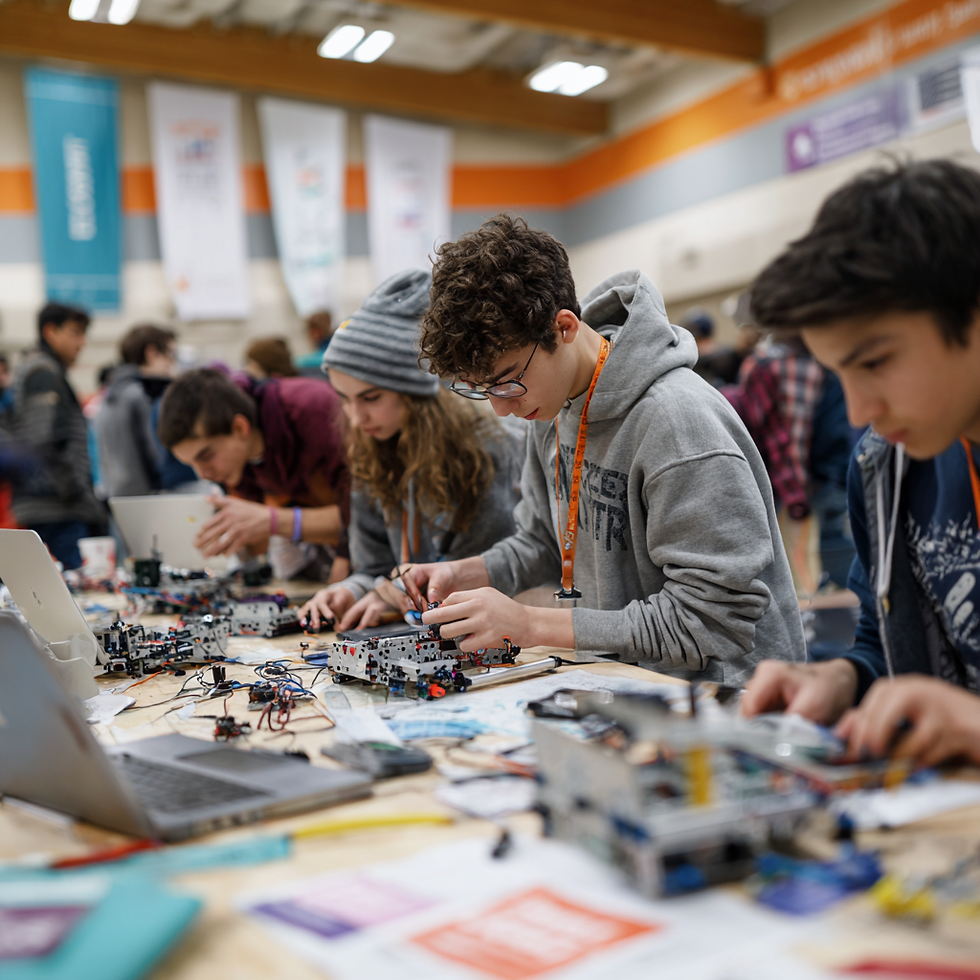
Maple Mind Academy’s success is rooted in its experiential learning philosophy centered on learning by doing. Participants build robots from the ground up, program them to perform complex tasks, and troubleshoot issues in real time. By promoting multidisciplinary teamwork, the Academy cultivates problem-solving skills that are crucial for thriving in STEM careers.
The Academy’s curriculum also incorporates emerging technologies such as machine learning and computer vision. These advanced topics, taught using tools like Python, Teachable Machine, and TensorFlow Lite, prepare students to engage with the latest AI developments and contribute meaningfully to future technological innovations.
Comprehensive Educational Programs and Competitive Robotics
Maple Mind Academy offers education across multiple robotics tracks, providing hands-on experience with mechanics and structure building using materials like HDPE, plywood, 3D printing filaments, acrylic, metal, and LEGO, along with basic 3D design principles.
Programming skills are developed through:
Blockly
Scratch
Python
Advanced learners receive introductions to CAD and industrial design using tools like SolidWorks and Fusion360.
The Academy supports participation in several prominent robotics leagues, including:
RoboCup Junior
FIRA (Federation of International Robot-soccer Association)
FIRST Robotics
VEX Robotics
It also organizes in-house innovation challenges to foster creativity and competitive spirit. These programs aim not just to win competitions but to surpass personal goals through teamwork, stress management, and technical complexity. Preparation for major competitions typically starts at least a year in advance.
What Are the Implications for Canada’s STEM Ecosystem?
The collaboration between RoboCup and Maple Mind Academy signals promising developments for Canada’s STEM landscape. It boosts youth interest and proficiency in science and engineering, helping to address Canada’s growing talent gap in these fields.
Furthermore, the hands-on challenges bridge the gap between theoretical knowledge and practical application. Students develop tangible skills applicable to diverse tech sectors such as autonomous vehicles, healthcare robotics, and smart manufacturing.
Maple Mind Academy’s initiatives also foster collaboration among academic institutions, industry leaders, and government agencies, contributing to a robust ecosystem that supports STEM education, research, and entrepreneurial innovation.
What Does the Future Hold for RoboCup and Maple Mind Academy in Canada?
The future outlook for RoboCup and Maple Mind Academy in Canada is exciting. Increasing integration of AI-driven autonomy in RoboCup robots will require even deeper computational thinking and algorithmic expertise from participants, aligning with Maple Mind Academy’s AI-focused curriculum updates.
Expansion of RoboCup leagues, particularly those focused on rescue robotics and industrial applications, is likely to attract students interested in socially impactful solutions. The Academy’s dedication to real-world problem-solving equips learners to excel in these emerging areas.
Additionally, digital transformation in education, supported by virtual collaboration tools and remote robotics labs, broadens access for students across Canada’s vast geography. Maple Mind Academy’s hybrid and virtual program delivery models ensure inclusivity and scalability.
Conclusion
The ongoing partnership between RoboCup and Maple Mind Academy is revolutionizing STEM education in Canada. Leveraging competitive robotics as an educational tool, these initiatives inspire innovation, cultivate expertise, and prepare young Canadians for a future integrated with robotics and artificial intelligence.
As RoboCup competitions grow in complexity and Maple Mind Academy continues to expand its reach and curriculum, Canada is well-positioned to become a leader in nurturing STEM talent. This marks a pivotal step toward academic excellence and national competitiveness in the global technology landscape.
For students, educators, and policymakers, the future holds immense promise. Robotics and AI serve as catalysts for learning, creativity, and discovery, driven by visionary organizations like Maple Mind Academy and dynamic platforms such as RoboCup. The journey toward that future is underway, with Canada playing a leading role in shaping it.


Comments