7–15 · In Person

Camps

A full week of robotics during a school break, ending with a robot the learner built from nothing.

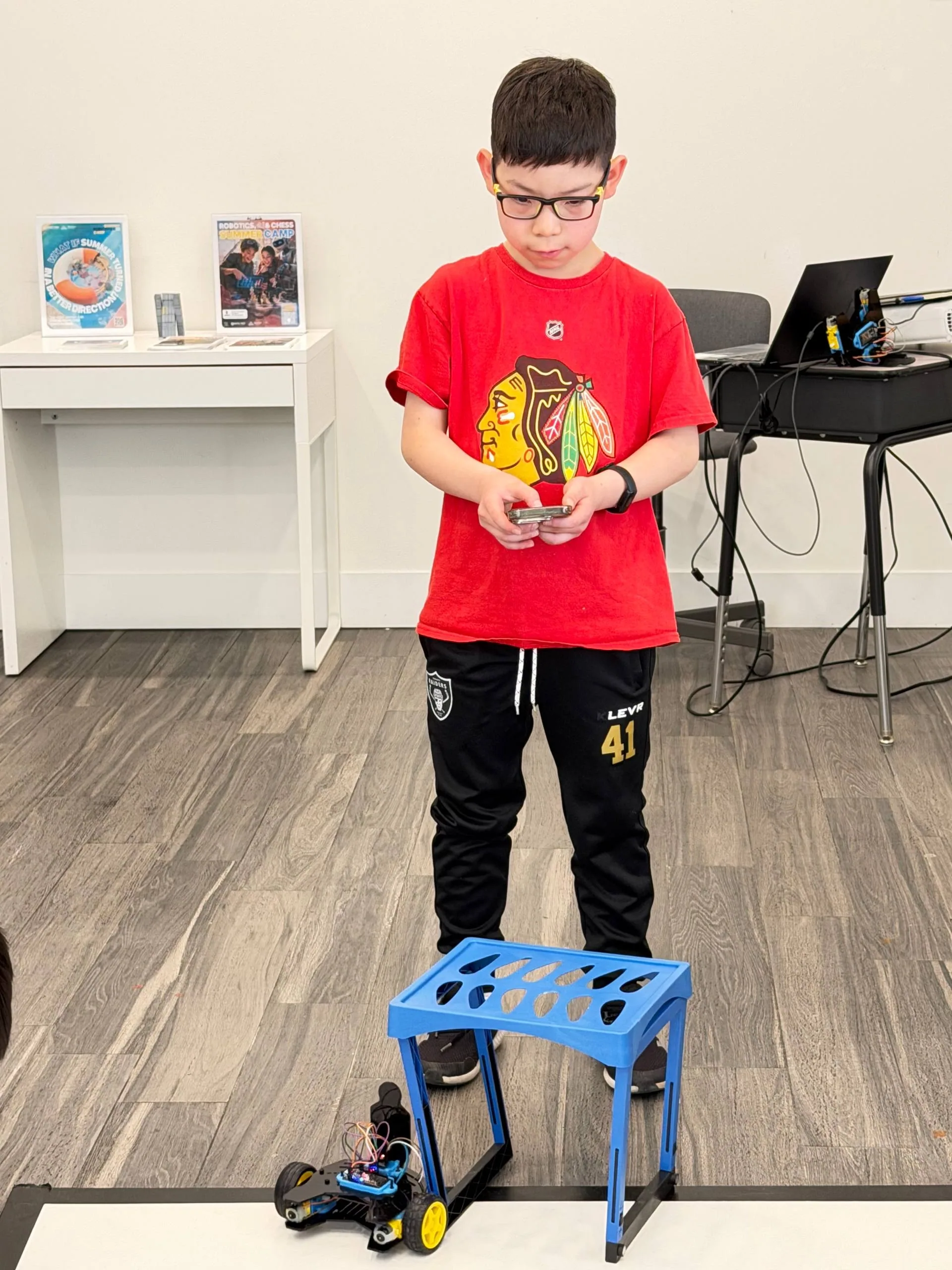
Concentrated build weeks during school breaks. Learners design, wire, program and test a working robot from start to finish.

Format
Full-day / week-long
Level
Intro → Intermediate
Commitment
Short Burst
Leads to
Robotics Tracks, competition preparation.
Why this exists

A camp compresses a whole progression into a week, which is the fastest way to find out where a curriculum drags and, for a family, the lowest-commitment way to find out whether robotics sticks.

Who it is for
  • A first serious try at robotics
  • Learners who do better in one intense block than in weekly instalments
  • Filling a school break with something that produces a finished thing
Choose something else if…

What becomes real.

Capabilities, and how far this program takes each one.

  • Mechanical assembly

    Foundation

    Getting from a pile of parts to a chassis that survives being driven.

  • Basic electronics

    Foundation

    Powering motors and sensors without releasing the smoke.

  • Block and text coding

    Foundation

    Enough programming to make the machine behave deliberately.

  • Iteration under time pressure

    Core

    Deciding what to fix when the week is running out: the actual engineering skill.

How it runs, and who it runs for.

  • Families

    In person, full day

    Run during school breaks at a Maple Mind lab.

  • Organizations

    Hosted at your site

    The same compressed week delivered in a school or community space.

What comes with it
  • Kits, tools and spares
  • Instructors for the full week
  • The lab or the delivered setup
What you bring
  • A full week of attendance
  • Lunch and the usual camp logistics
For a school

As a break-week program

Camps are how a lot of schools start: a self-contained week that shows staff and families what a robotics program looks like before anything is installed.

Which of these lands on your staff depends on the engagement model: we run it, we run it with you, or you run it.

See how a school program works
What they build
  • A complete working robot
  • Challenge attachments
  • A final demo run
What they learn
  • Mechanical assembly
  • Basic electronics
  • Block and text coding
  • Iteration under time pressure
Tools & technology
  • Robotics kits
  • Hand tools
  • Sensors
  • KidBot Studio
On the floor

What it is actually like.

One session, in the order it happens.

Beat 01

Hardware in hand on day one

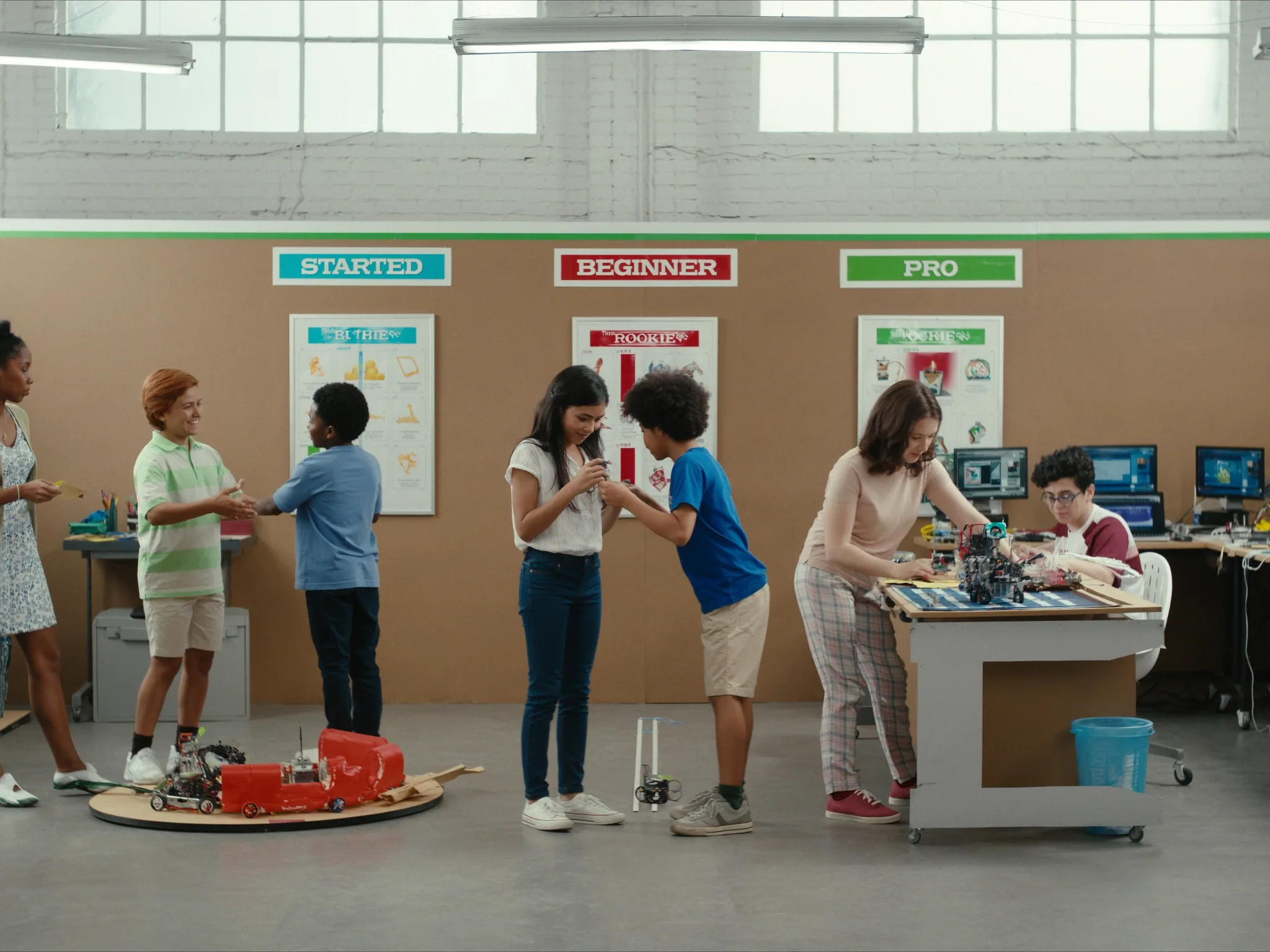
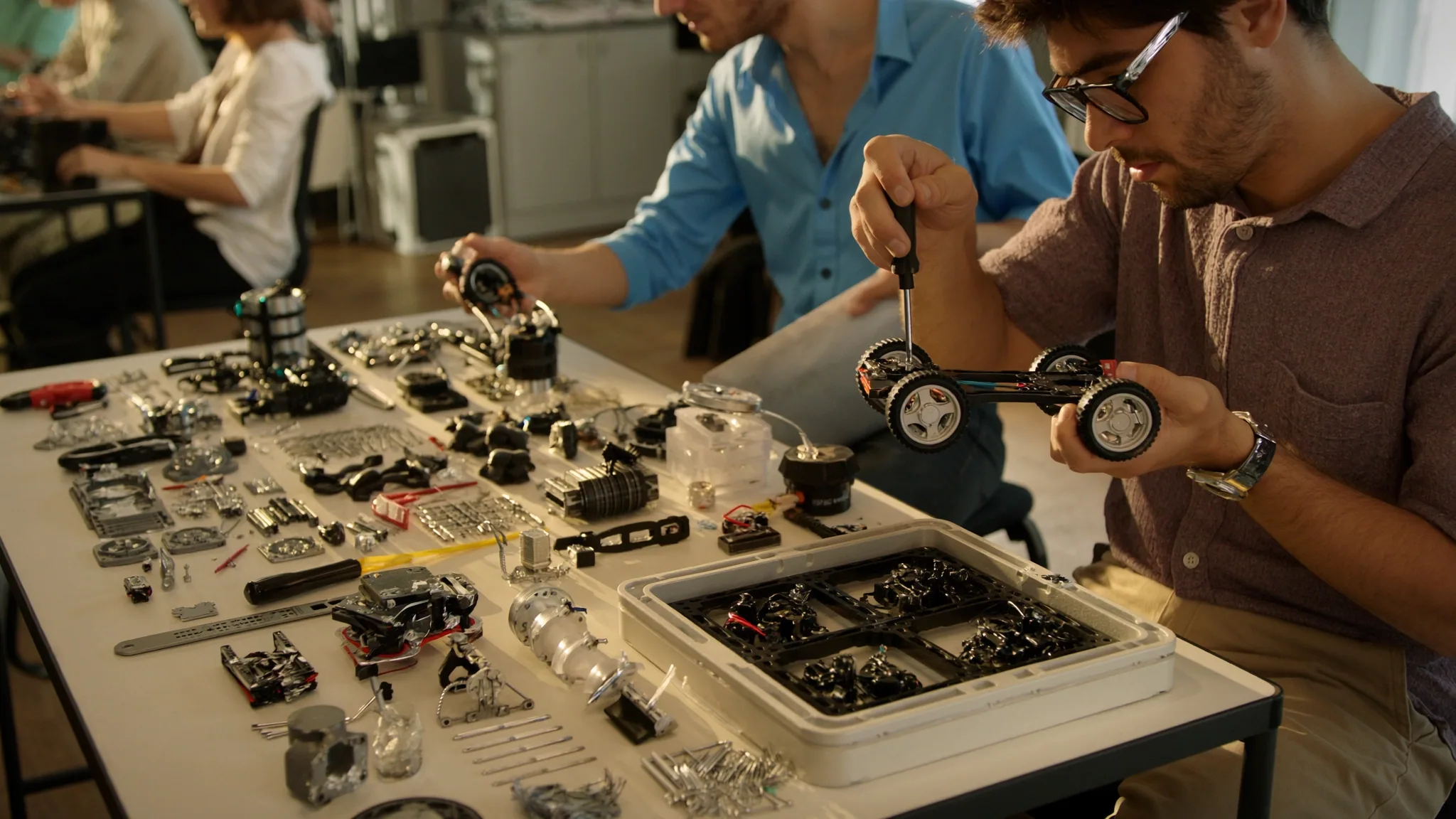
The build starts in the first hour. There is no theory week before anyone is allowed to touch a robot.

  1. Day one
  2. Mid-week
  3. Demo day
Beat 02

The logic layers on mid-week

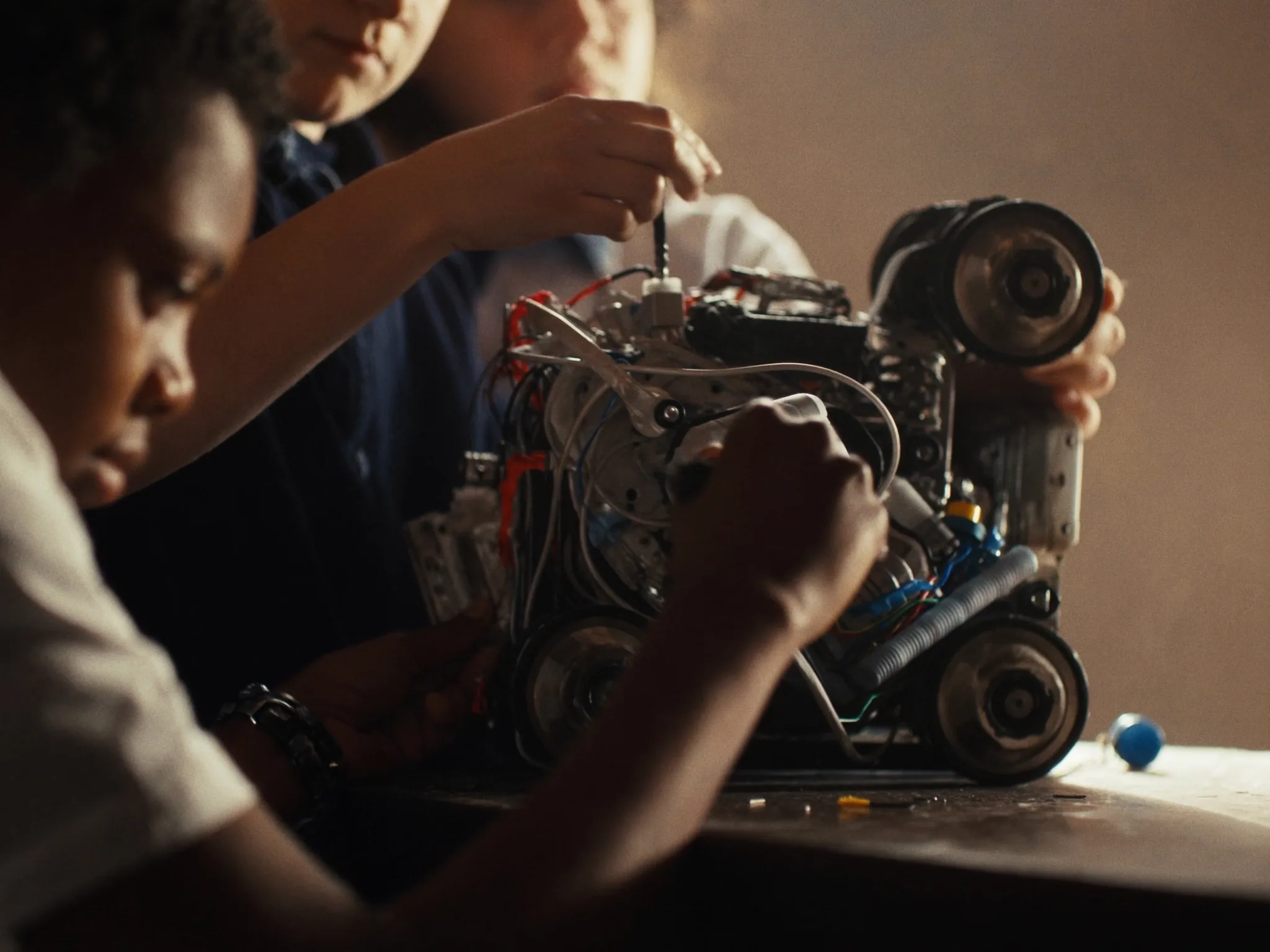
Once it drives, code and sensors go in, which is when the robot starts doing things nobody explicitly told it to.

  1. Day one
  2. Mid-week
  3. Demo day
Beat 03

It has to run in front of people

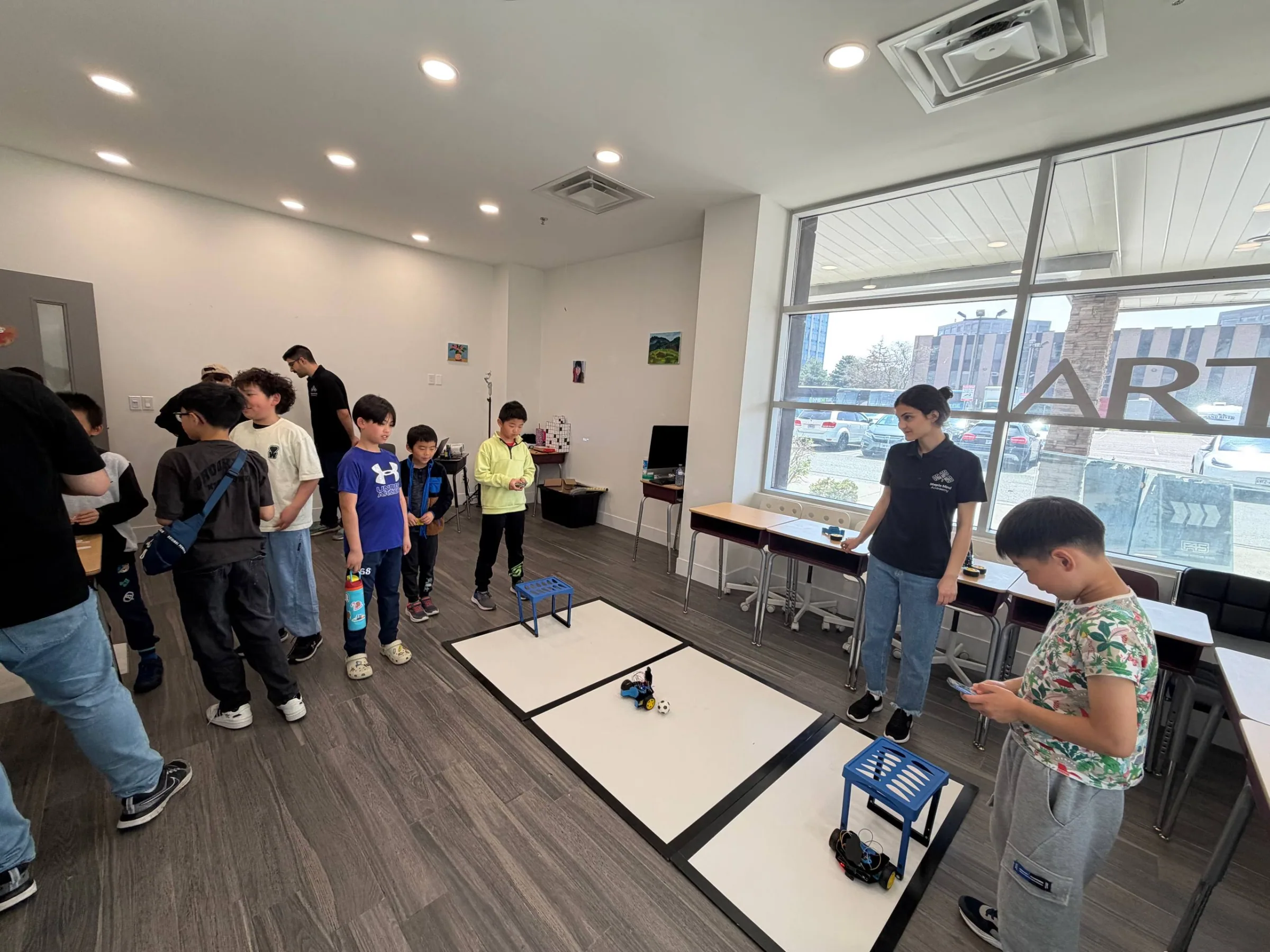
The week ends with a demo. A robot that works on the bench and not on demo day is a normal and instructive outcome.

  1. Day one
  2. Mid-week
  3. Demo day
How it works
  1. 01

    Day one build

    Hardware in hand within the first hour.

  2. 02

    Mid-week logic

    Code, sensors and autonomy layered onto the build.

  3. 03

    Demo day

    Learners present and run their robot.

One part of a bigger system

Built in real classrooms. Turned into infrastructure.

A camp compresses a whole progression into a week, which is the fastest way to find out where a curriculum drags.

This programCamps
Curriculum

Level-based progressions written against the hardware, not adapted to it.

FAQ

Questions about Camps .

About the program

If you are a parent

Every question, across the whole ecosystem
Other programs

Compare with the rest of the system.

In Person

Robotics Tracks

A weekly robotics class that keeps going: the same learner moves up through levels rather than repeating an introduction.

Who
11–16+
Format
Weekly
Level
Beginner → Advanced
Long-Term
Online / Hybrid

Hybrid & Online

Live robotics classes over video, with a real kit shipped to the learner so they are building actual hardware at home.

Who
9–16+
Format
Live cohorts
Level
Beginner → Advanced
Term-Based
In Person / Online

Skill Builders

A short, focused module on one thing (CAD, electronics, vision, 3D printing) for someone who already builds but has a specific gap.

Who
10–16+
Format
Short modules
Level
Targeted
Focused
Where to go from here
For a family

See upcoming camps

For an organization

Host a Maple Mind camp

Enrolment

Start at the right level, not the easy one.

Two minutes of questions tells us whether this program fits, or whether something else in the ecosystem fits better.