11–16+ · In Person

Robotics Tracks

A weekly robotics class that keeps going: the same learner moves up through levels rather than repeating an introduction.

A long-term, level-based track where learners move from first mechanical builds through electronics, code, autonomy and competition robots.

Format
Weekly
Level
Beginner → Advanced
Commitment
Long-Term
Leads to
Competition teams, advanced automation, mentorship roles.
Why this exists

Tracks are the spine of the progression. Everything else in the programs list either feeds into a track, compresses one, or specialises out of it, so the level structure gets tested here first and week after week.

Who it is for
  • A learner who wants to keep building rather than try robotics once
  • Families who can commit to a regular weekly slot
  • Anyone aiming at competition eventually
Choose something else if…

What becomes real.

Capabilities, and how far this program takes each one.

  • Mechanical design

    Core

    Frames, drivetrains, tolerances and why a part that fits in CAD binds in aluminium.

  • Electronics

    Core

    Power, signal and ground; motor drivers and sensors wired so faults are findable.

  • Programming

    Core

    Control logic and structure, then reading what the robot actually did.

  • Autonomy

    Advanced

    Sensor-driven behaviour, feedback and calibration.

  • CAD and fabrication

    Advanced

    Designing and printing the parts a kit does not contain.

How it runs, and who it runs for.

  • Learners and families

    In person, weekly

    Join at the level a short placement build puts you at.

  • Schools

    Delivered, co-delivered or run by your staff

    The same level structure installed as a school program, with the delivery split decided by the engagement model.

What comes with it
  • The level-based curriculum and its outcomes
  • Robotics kits, components and spares at the bench
  • Instructors and the lab space
  • KidBot Studio for logic before wiring
What you bring
  • Attendance at a regular slot
  • Curiosity and a tolerance for things not working
For a school

As a school's core robotics program

Tracks are the version most schools install, because a level structure is what turns a robotics club into a program somebody else can run next year.

Which of these lands on your staff depends on the engagement model: we run it, we run it with you, or you run it.

See how a school program works
What they build
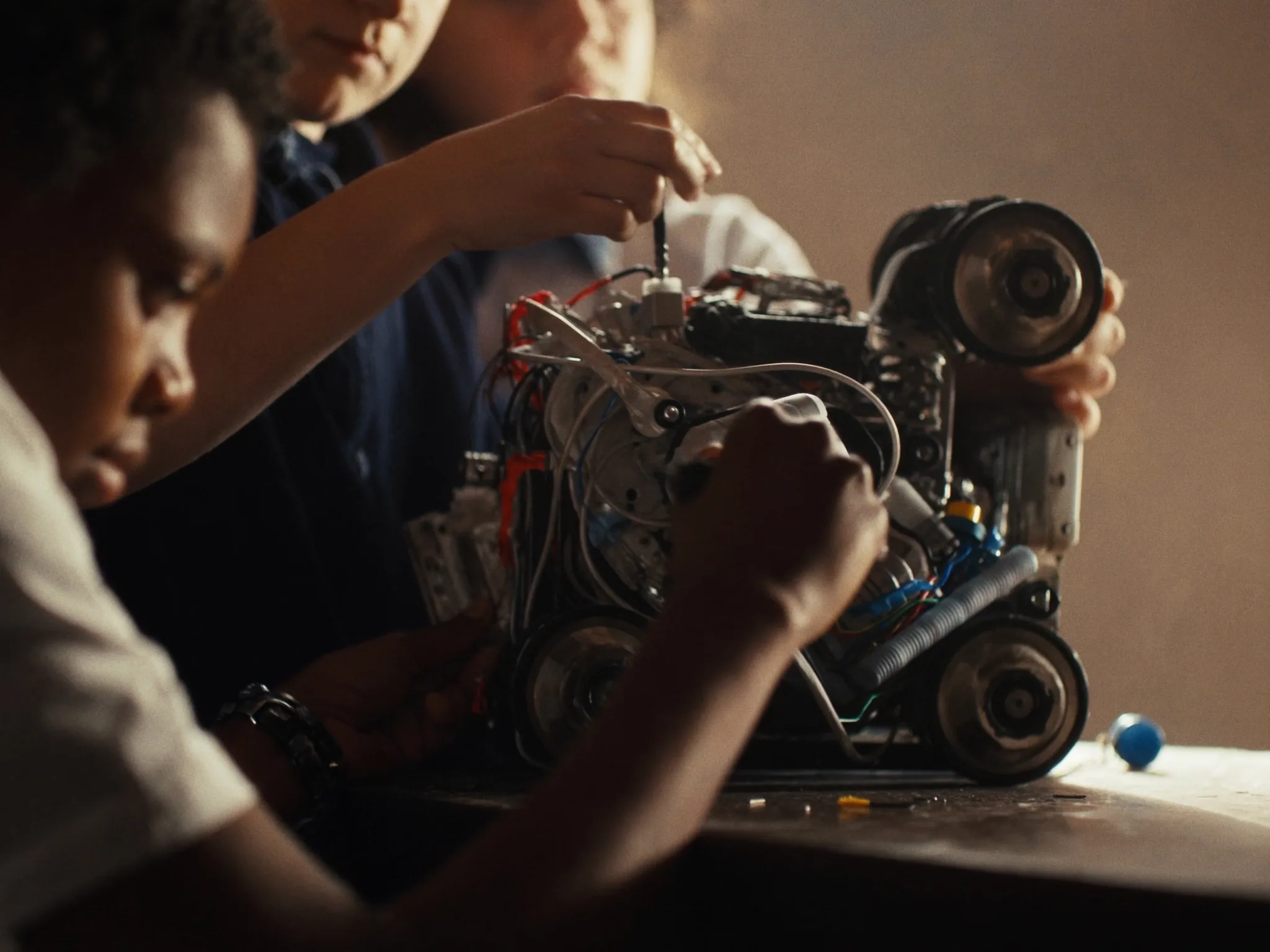
  • Drive bases and custom chassis
  • Sensor-driven autonomous robots
  • Competition-ready mechanisms
  • 3D printed and laser-cut parts
What they learn
  • Mechanical design and tolerances
  • Wiring, power and electronics safety
  • Structured programming and control logic
  • Debugging as an engineering discipline
Tools & technology
  • Microcontrollers
  • Motor drivers
  • Sensor arrays
  • CAD
  • 3D printing
  • KidBot Studio
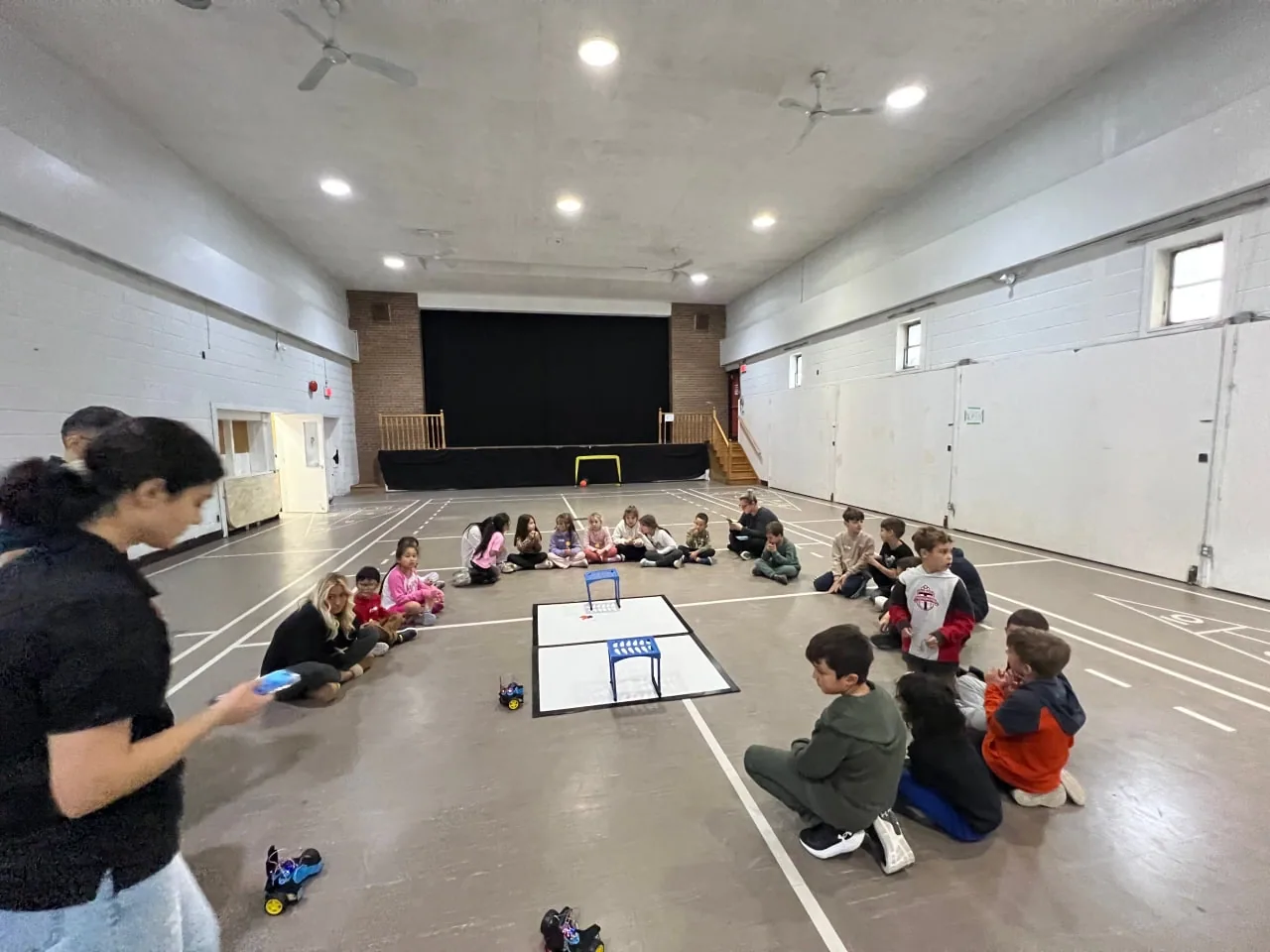
On the floor

What it is actually like.

One session, in the order it happens.

Beat 01

Your build stays on the bench

Work continues from where it stopped, so problems carry over instead of being reset each week. That is what makes the progression cumulative rather than a series of activities.

  1. Continuity
  2. Something runs
  3. Review
Beat 02

Every session ends with something that runs

It moves, it senses, or it fails in a way that tells you why, which is the part that gets debugged next week.

  1. Continuity
  2. Something runs
  3. Review
Beat 03

Levels are reviewed against outcomes

Moving up depends on what a learner can design, wire, program or debug, not on how long they have attended.

  1. Continuity
  2. Something runs
  3. Review
How it works
  1. 01

    Placement

    A short build and conversation places the learner at the right level.

  2. 02

    Weekly build cycles

    Every session ends with something that moves, senses or fails informatively.

  3. 03

    Level reviews

    Progress is reviewed against engineering outcomes, not attendance.

One part of a bigger system

Built in real classrooms. Turned into infrastructure.

Tracks are where a level structure gets tested week after week. If a progression does not hold here, it does not ship to a school.

This programRobotics Tracks
Curriculum

Level-based progressions written against the hardware, not adapted to it.

FAQ

Questions about Robotics Tracks .

About the program

If you are a parent

Every question, across the whole ecosystem
Other programs

Compare with the rest of the system.

In Person

Camps

A full week of robotics during a school break, ending with a robot the learner built from nothing.

Who
7–15
Format
Full-day / week-long
Level
Intro → Intermediate
Short Burst
Online / Hybrid

Hybrid & Online

Live robotics classes over video, with a real kit shipped to the learner so they are building actual hardware at home.

Who
9–16+
Format
Live cohorts
Level
Beginner → Advanced
Term-Based
In Person / Online

Skill Builders

A short, focused module on one thing (CAD, electronics, vision, 3D printing) for someone who already builds but has a specific gap.

Who
10–16+
Format
Short modules
Level
Targeted
Focused
Where to go from here
For a learner

Find your starting level

For a school

Run this track at your school

Enrolment

Start at the right level, not the easy one.

Two minutes of questions tells us whether this program fits, or whether something else in the ecosystem fits better.