Kit arrives
The kit arrives before you do
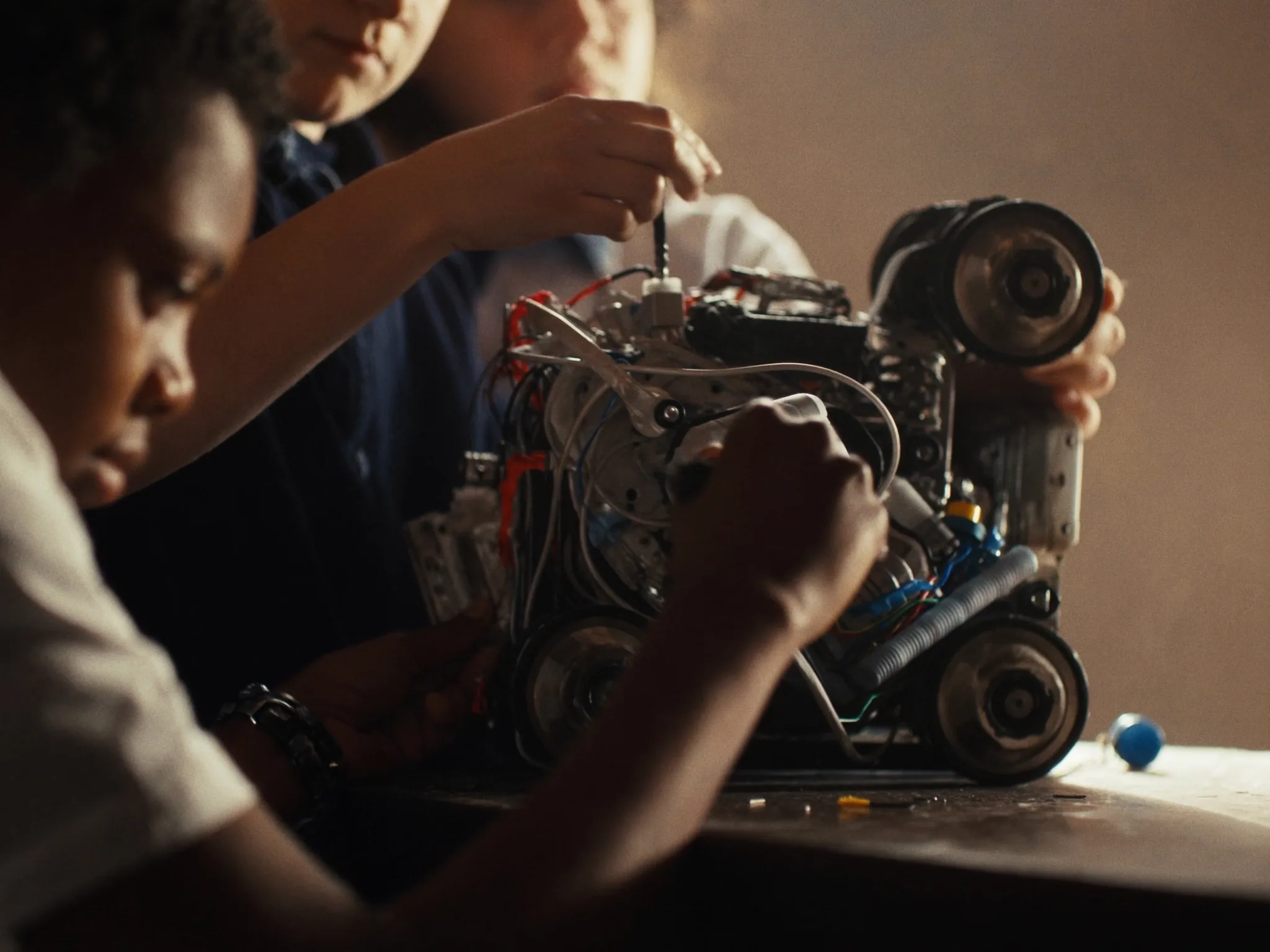
Hardware ships ahead of the cohort, so the first session is a build session rather than an unboxing.
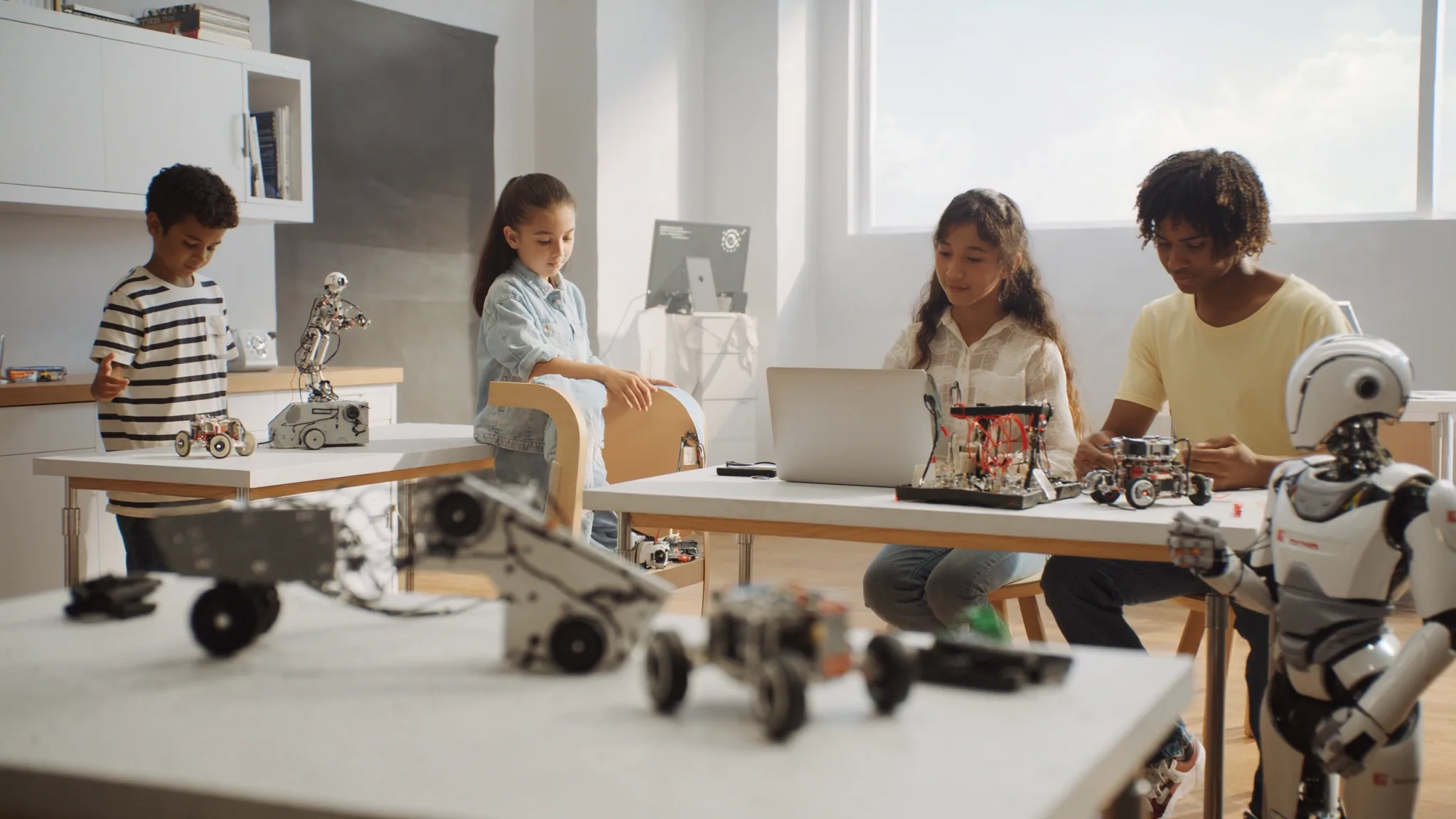
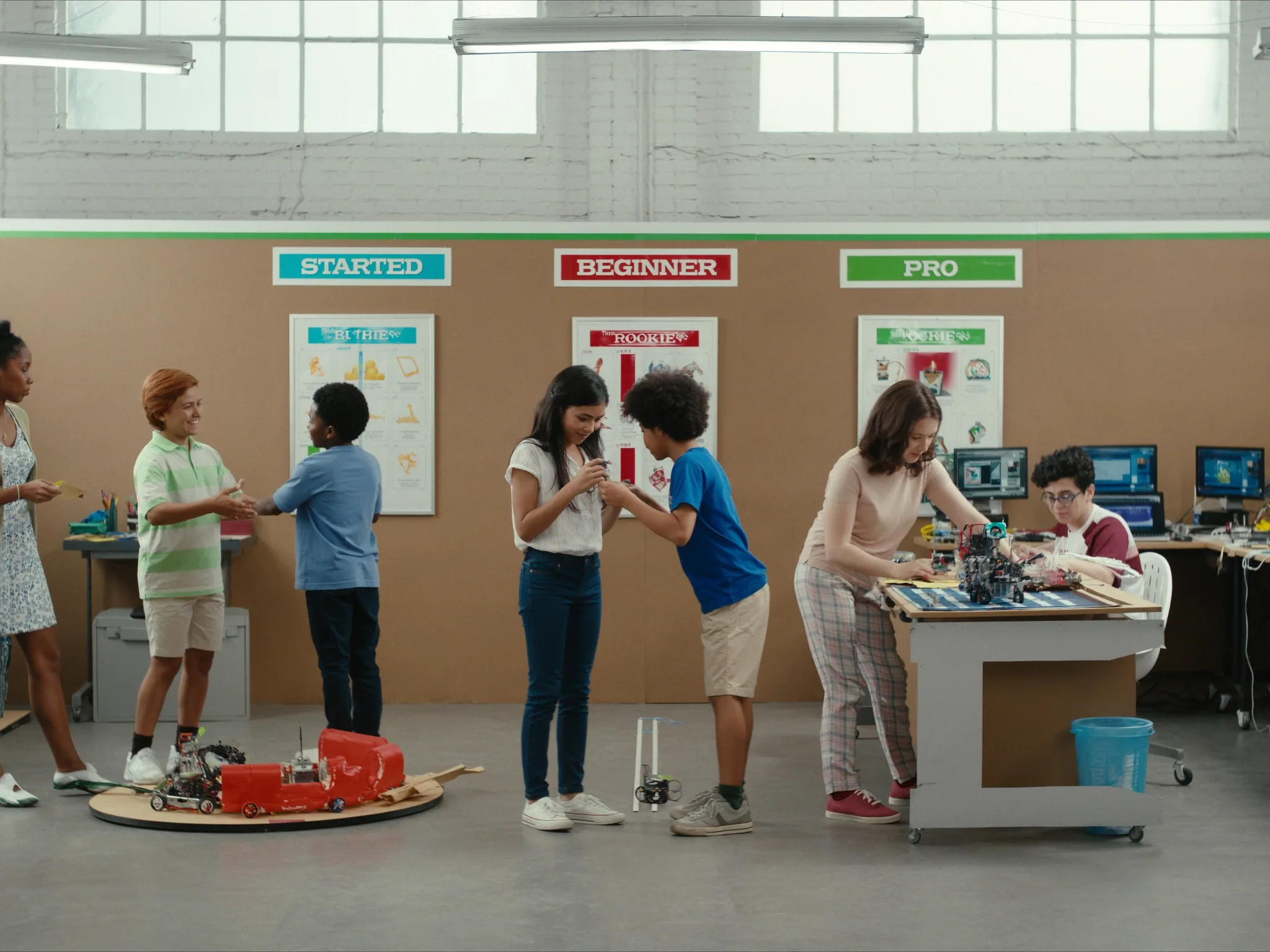
Live robotics classes over video, with a real kit shipped to the learner so they are building actual hardware at home.
Live instructor-led robotics with a real kit shipped to the learner. Simulation in KidBot Studio bridges sessions.
Online cohorts prove whether a lesson survives without an instructor standing at the bench. That is the same test a program has to pass before a school's own staff can run it, so this is where the curriculum's independence gets checked.
One session, in the order it happens.
Hardware ships ahead of the cohort, so the first session is a build session rather than an unboxing.
You have to describe what the robot is doing to somebody who cannot see it. That constraint makes learners better at diagnosis than a lab does.
KidBot Studio carries logic work between sessions, so momentum does not depend on having the instructor present.
What they build, the capabilities it moves and how far, and the tools on the bench.
Isolating a fault and explaining it precisely enough to get help.
Recording what changed, because nobody else saw you change it.
Getting unstuck alone before the next session.
Testing logic before committing it to hardware.
Small-group instruction on a schedule, with hardware at home.
Used to extend a school program's reach beyond the timetabled sessions.
Online cohorts prove whether a lesson survives without an instructor standing at the bench, the same test a school program has to pass.
Curriculum
Level-based progressions written against the hardware, not adapted to it.
Hardware ships before the cohort begins.
Small-group instruction with build checkpoints.
Simulation and challenges keep momentum.
Live cohorts run on Maple Mind Online, with the kit shipped to you before the cohort begins.
For a school:Blend online with in-person