In Person
Robotics Tracks
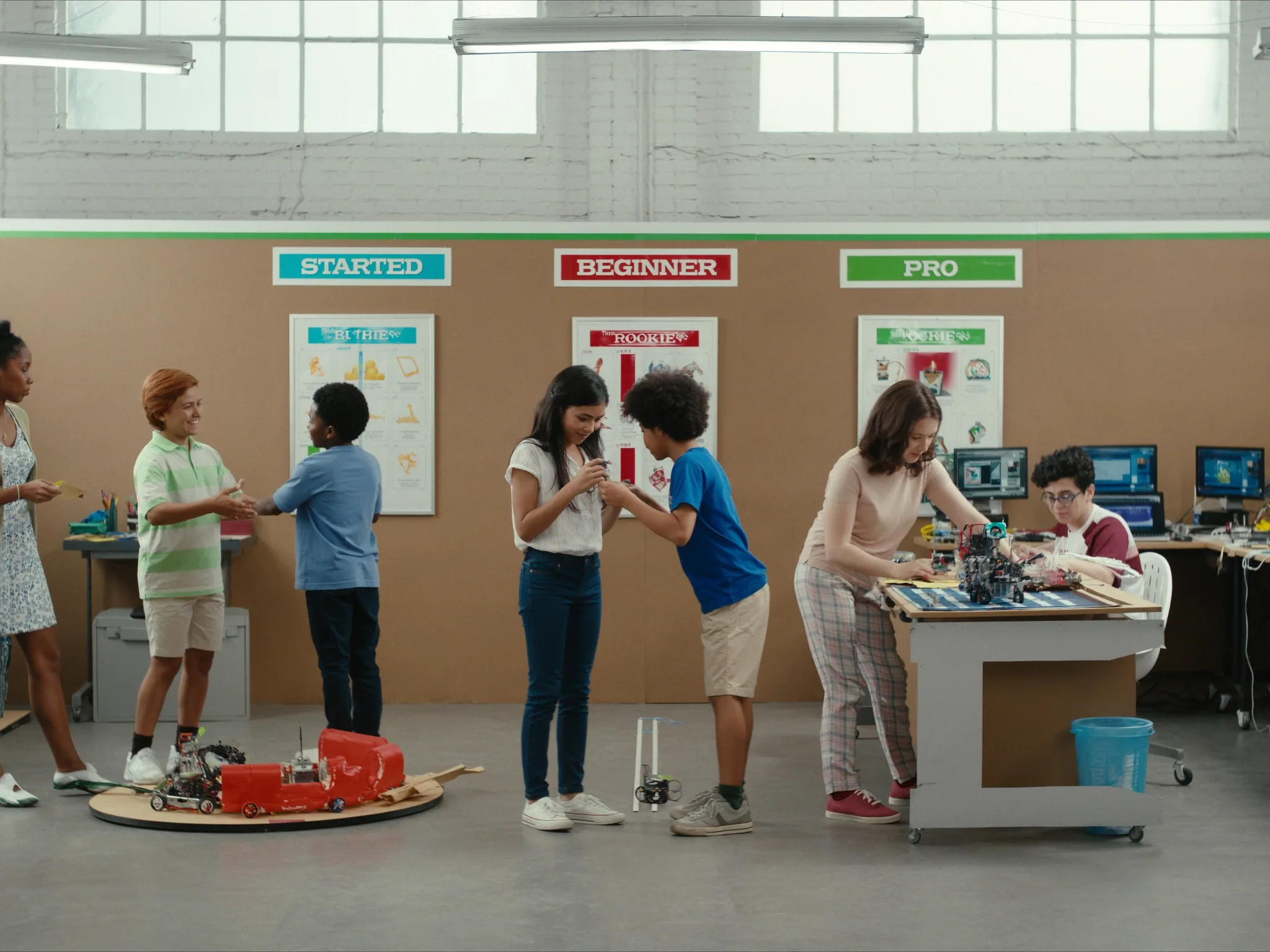
A weekly robotics class that keeps going: the same learner moves up through levels rather than repeating an introduction.
- Who
- 11–16+
- Format
- Weekly
- Level
- Beginner → Advanced
Long-Term
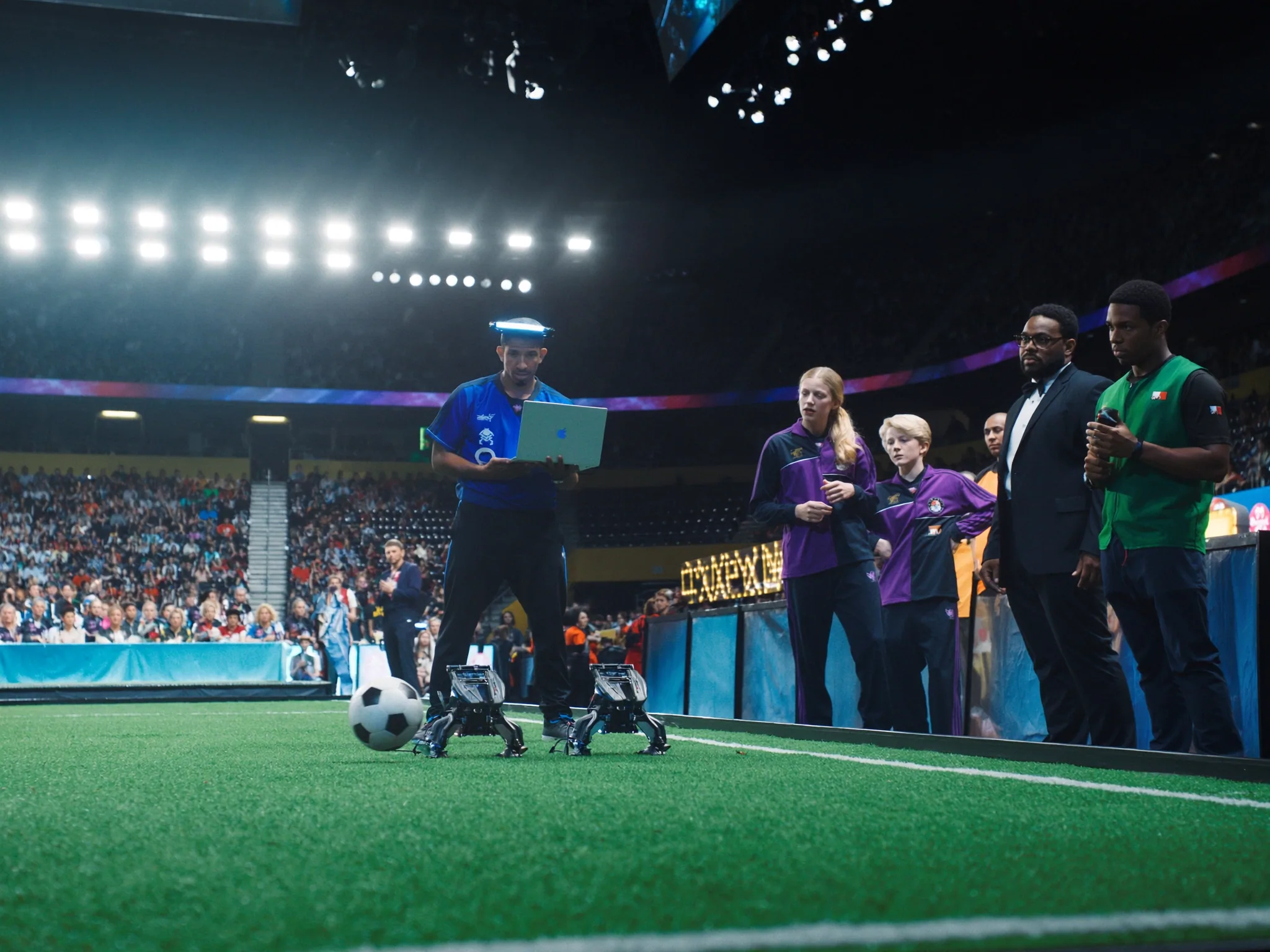
Team-based robotics aimed at competing: design under a rulebook, build, test, break, rebuild, and go up against other teams.
Team-based competition preparation: strategy, design cycles, driver practice, engineering notebooks and match analysis.
Competition is the external exam. A season tells us what to change in the curriculum, the kit list and the instructor training, judged by people with no reason to be generous.
Capabilities, and how far this program takes each one.
Engineering to a rulebook, a size limit and a deadline you did not choose.
Working out why it broke rather than replacing the part and hoping.
Dividing an engineering problem across people and keeping it coherent.
Reading the game, not just the machine.
Built to the season's rules, driven by the team that designed it.
The record of decisions, failures and revisions, judged in its own right at many competitions.
Teams build the environment they test in, which is its own design problem.
Join a team through the competition pathway.
Team structure, season planning and coaching installed as part of a school program.
Competition is usually what a school program grows into once the level structure is running and learners want somewhere to point it.
Which of these lands on your staff depends on the engagement model: we run it, we run it with you, or you run it.
See how a school program worksOne session, in the order it happens.
Teams organise around real engineering functions (design, build, code, drive, strategy) because a competition robot is too much for one person.
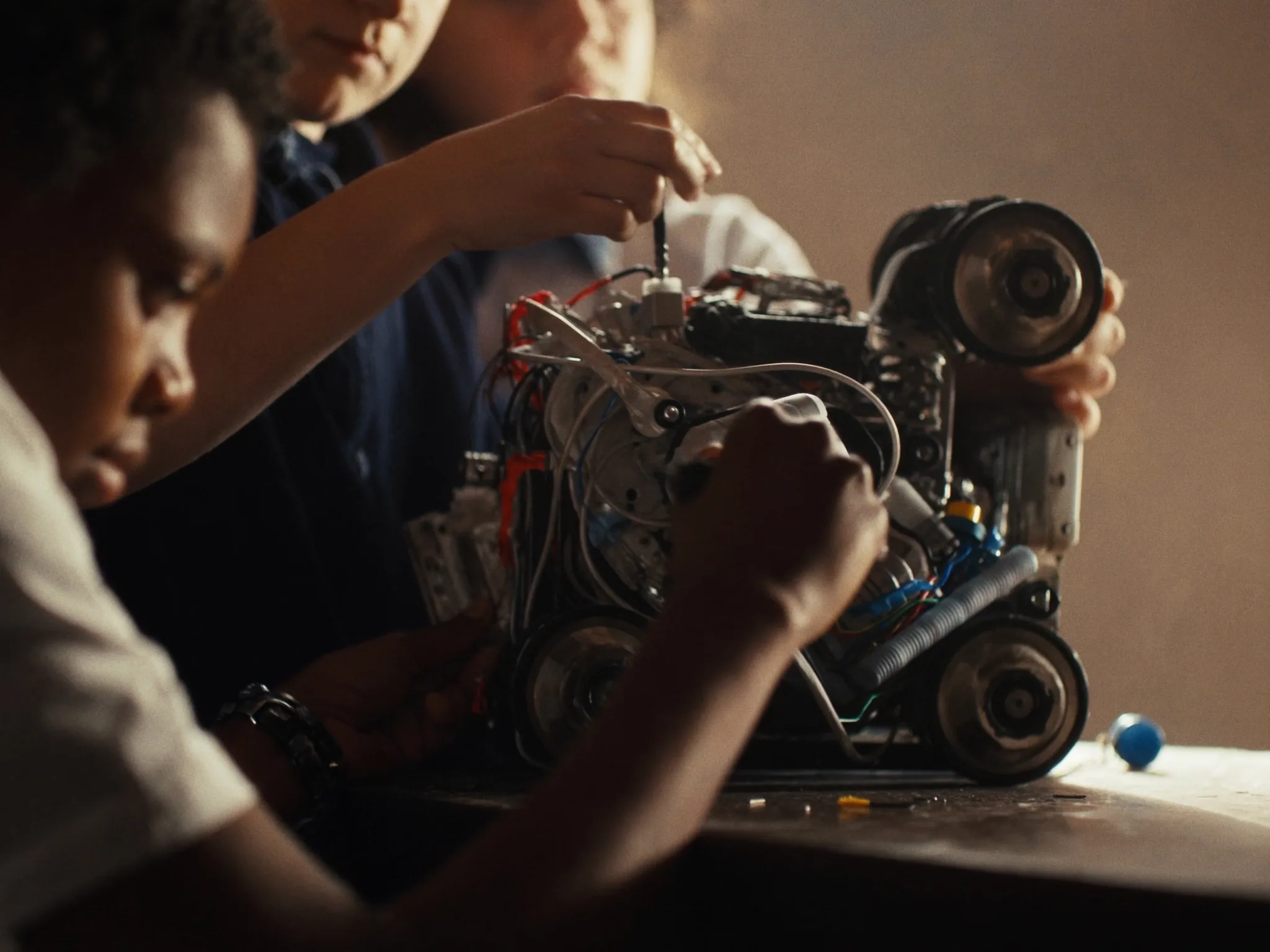
Prototype, test, break, improve. Most of a season is finding out what does not work while there is still time to change it.
A robot that performs in practice and folds in a match is telling you something specific about your design.
Roles assigned around real engineering functions.
Prototype, test, break, improve. Repeatedly.
Practice, compete, review, iterate.
Competition is the external exam. A season tells us what to change in the curriculum, the kit list and the instructor training, and it is run by people with no reason to be generous.
Level-based progressions written against the hardware, not adapted to it.
A weekly robotics class that keeps going: the same learner moves up through levels rather than repeating an introduction.
Two minutes of questions tells us whether this program fits, or whether something else in the ecosystem fits better.