What a competition season actually teaches
Constraint, iteration, pressure and teamwork, in that order. The trophy is the least informative part of the weekend.
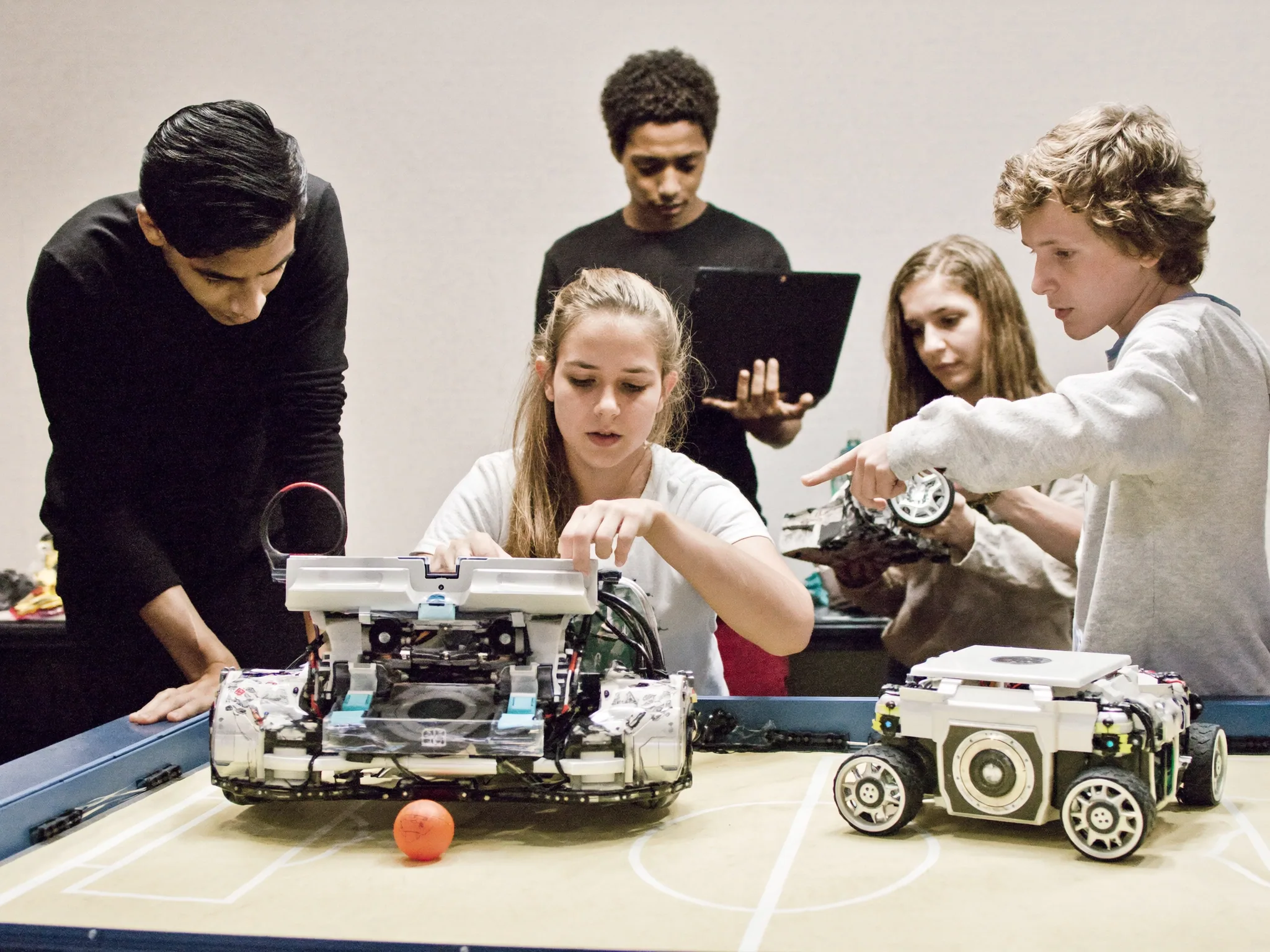
Competition is the part of robotics education that is easiest to misread from outside. It looks like the point is winning. From inside a season, the ranking is the least interesting output. It is a single number produced by a weekend, attached to months of work that taught four specific things.
Constraint
A competition rulebook is the first real specification most learners meet. Size limits, weight limits, banned components, a scoring table that rewards some behaviours and ignores others.
Learners who have only built freely find this genuinely difficult, and that difficulty is the lesson. Engineering is not doing the best possible thing; it is doing the best thing available inside a boundary somebody else drew.
Iteration
The first version of a competition robot is always wrong. So is the second. A season has enough time to be wrong repeatedly and improve, which is a rhythm most school work never provides: assignments are usually submitted once and graded once.
The teams that improve fastest are not the ones with the best first design. They are the ones that test earliest and are least attached to what they built.
Pressure
Something always breaks at the venue. A connector fails during inspection, a wheel loses grip on an unfamiliar surface, code that worked in the lab meets different lighting.
Learners discover that calm, systematic diagnosis under time pressure is a skill in itself, separate from knowing how the robot works. Teams that practise repairs (deliberately breaking their own robot and fixing it against a clock) handle competition day differently from teams that only practise driving.
Teamwork, in the specific sense
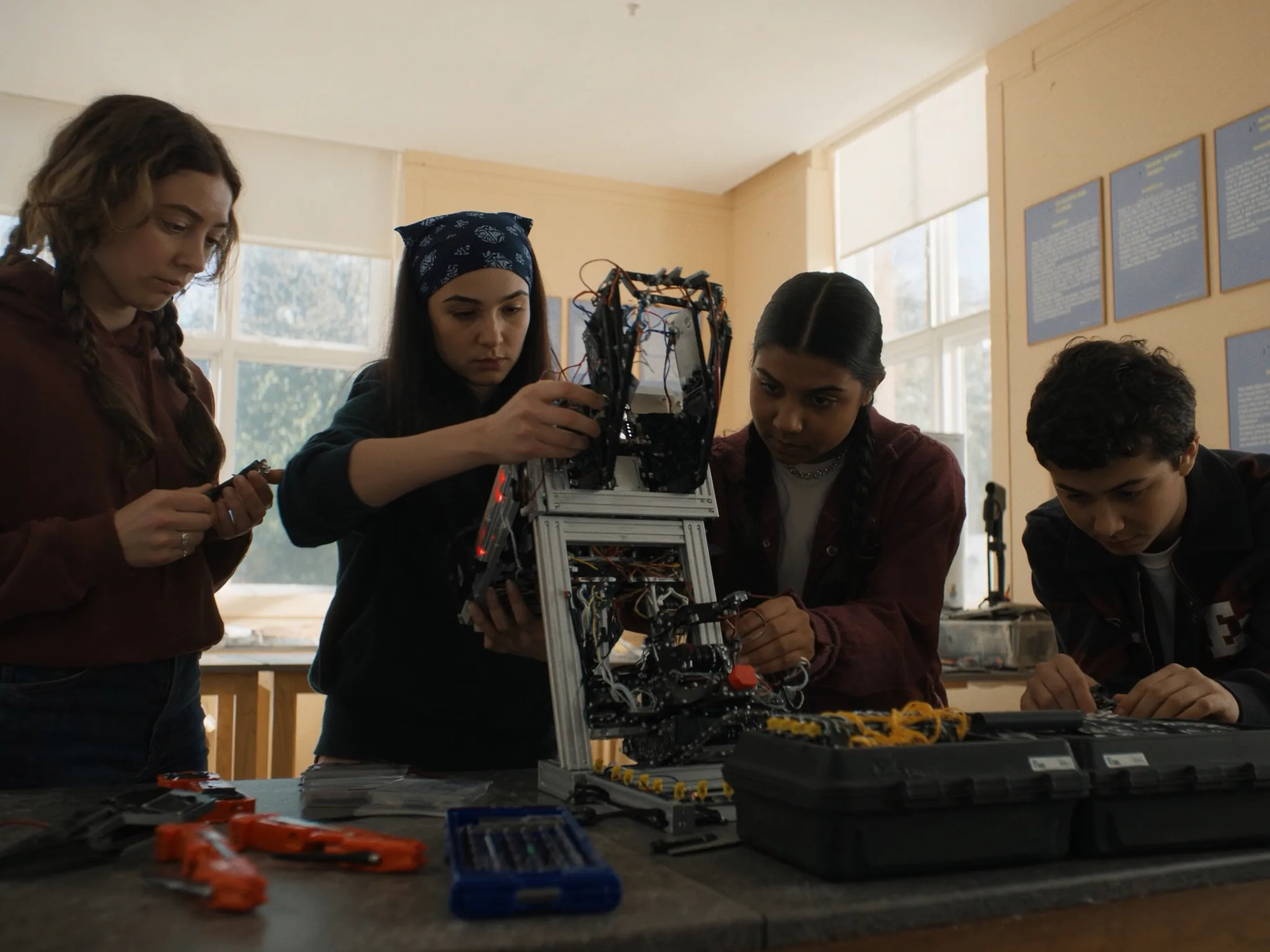
Competition teamwork is not general cooperation. It is division of a system into parts that can be worked on in parallel, plus an agreed way to put them back together. Drive, mechanism, code, strategy, documentation.
The failure mode is a team where one strong builder does everything and three learners hold tools. It looks efficient and it wastes three quarters of the season, so we structure roles explicitly and rotate them between events.
Why we run competitions at all
Competition is also how we check ourselves. A curriculum can look excellent on paper and produce learners who cannot adapt to an unfamiliar field. Hardware can survive a classroom and fail a tournament floor. A season is an external test of our own work, run by people with no reason to be generous about it.
What comes back from that weekend changes the curriculum, the kit list and the instructor training. That is the real reason competitions sit inside the ecosystem rather than beside it.
- Competitions
- Teams
- Engineering